Oct 03, 2025
11 min read
[ Plett Arts Festival . 3-12 October 2025 ]
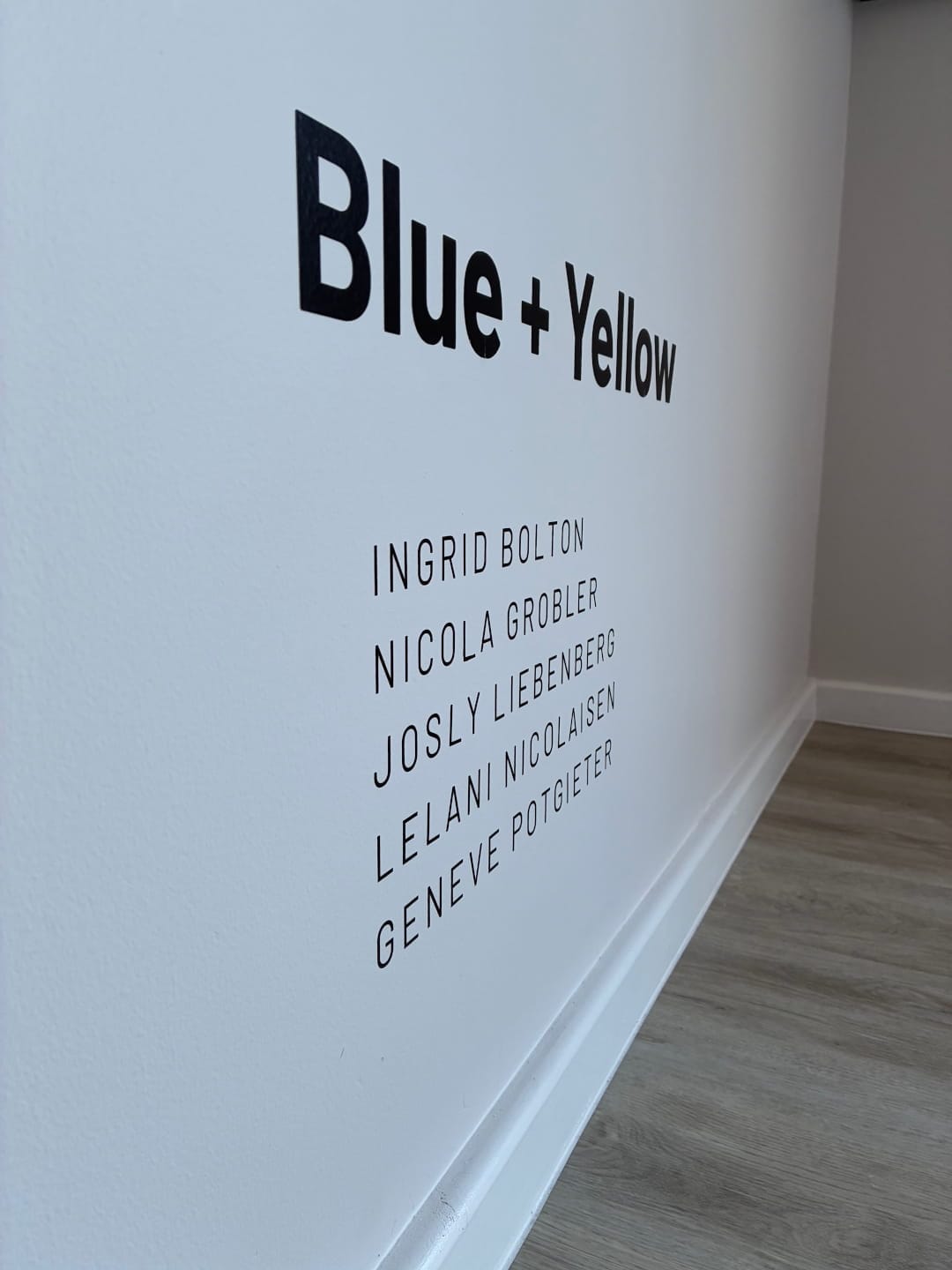
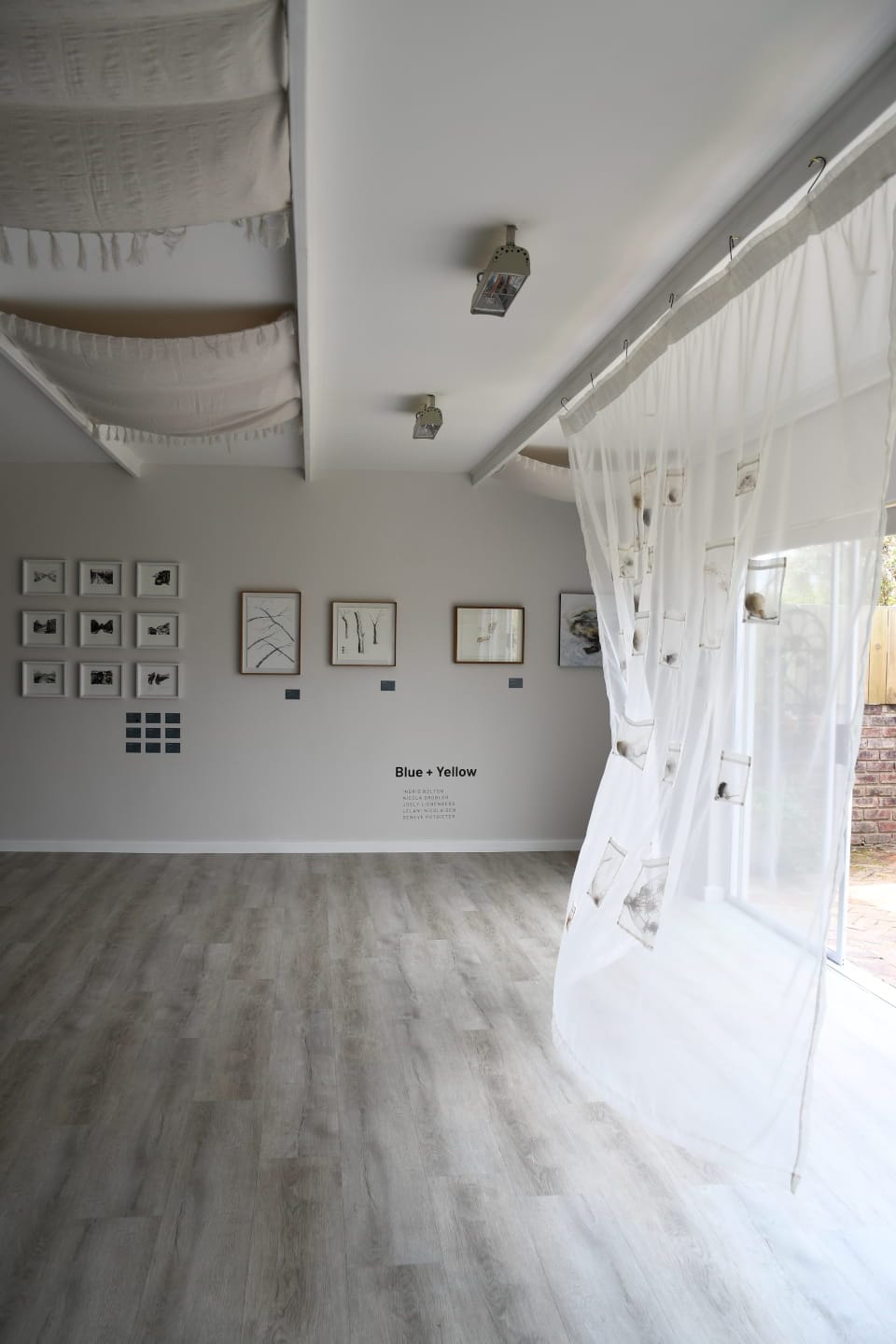
Blue + Yellow
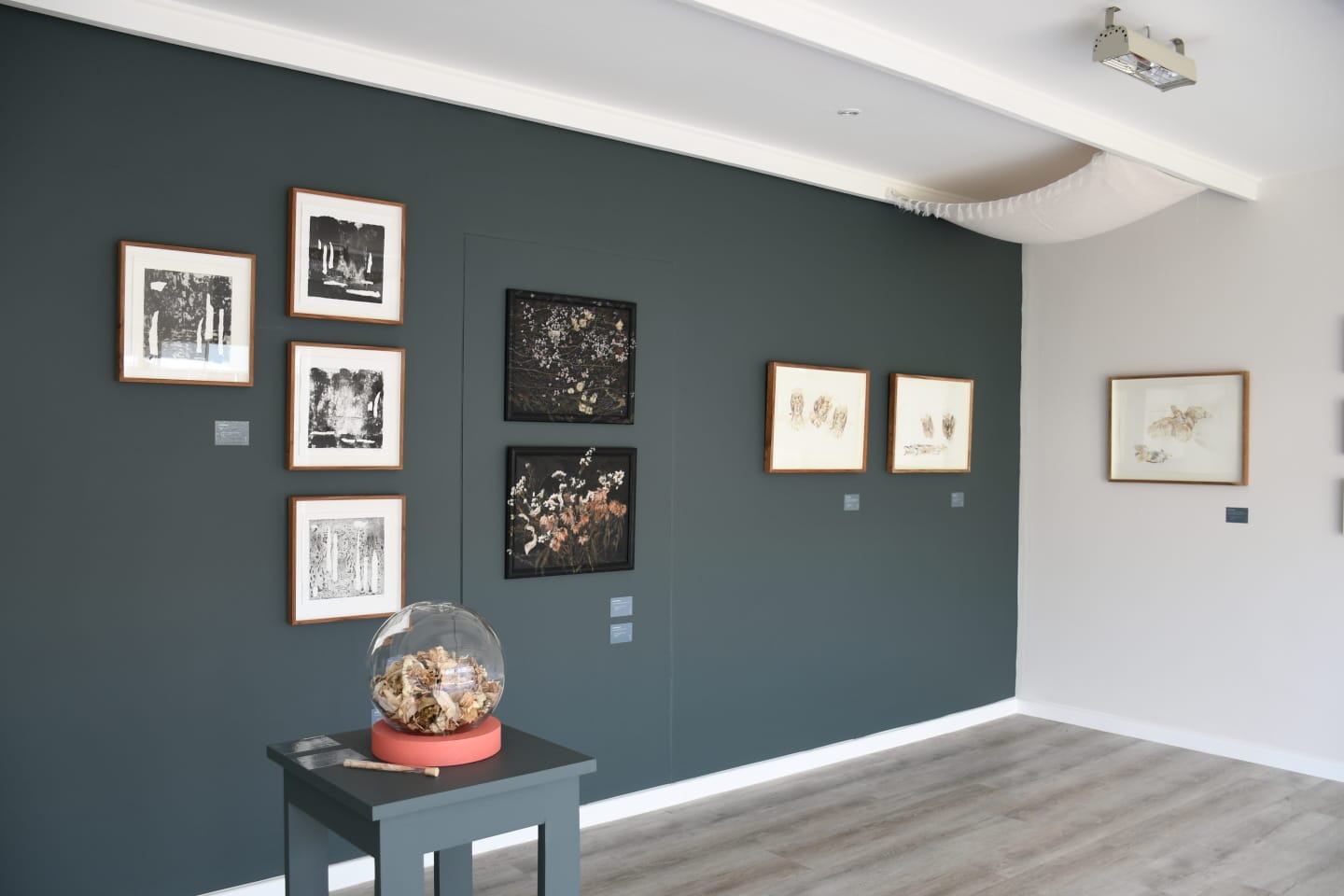
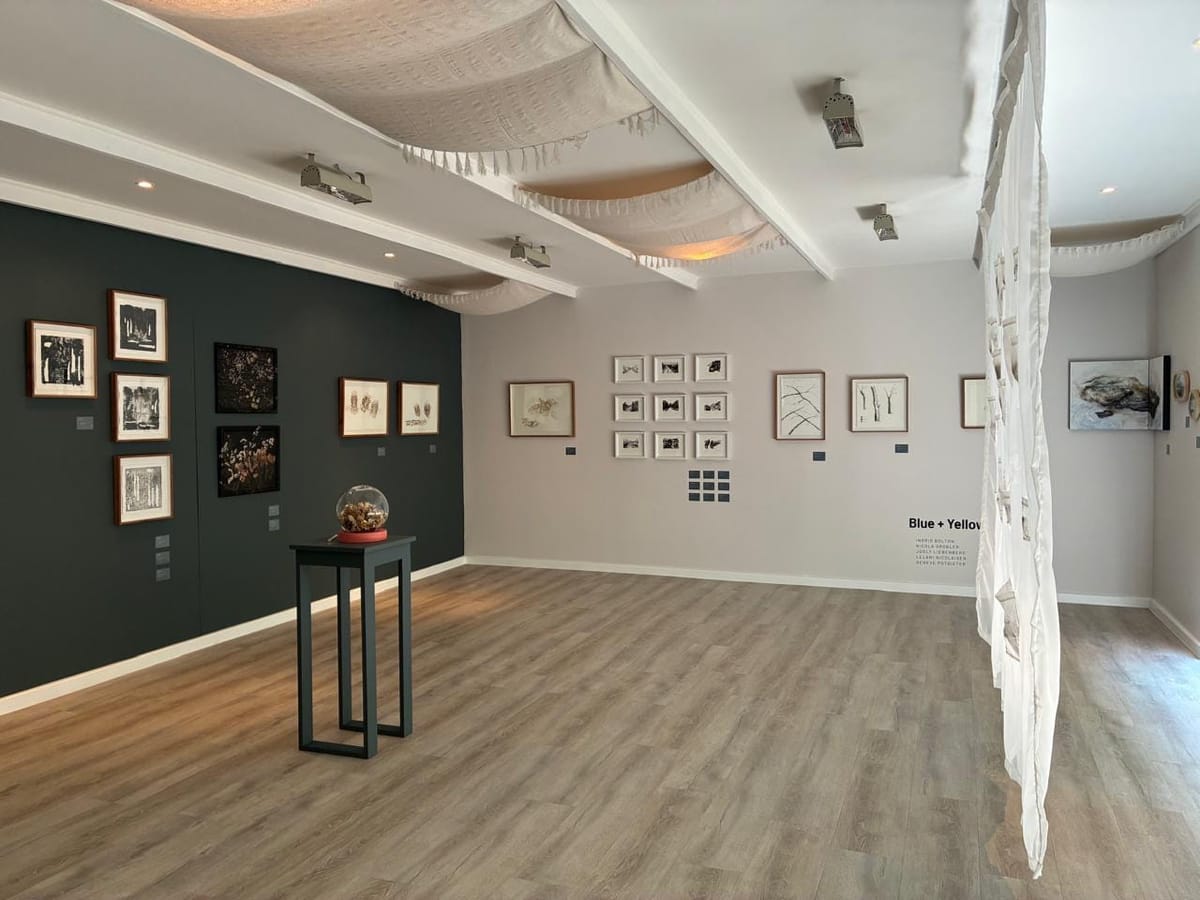
As the world has become obsessed with social media, we recognise a clear disconnect globally in how people choose to engage with their ecological environment. The habit of scrolling as a mediated version of connection promotes a distanced perspective, but it also presents a narrated view of the current status quo. By exhibiting artworks that pertain to ecological concerns, we aim to draw attention to the behavioural disconnect between humans and our ecological environment. The artists exhibiting foster a deeper connection with nature, through their creative research, in order to actively engage with the ecological system that they form a part of. Therefore, this exhibition offers an alternative perspective to what we perceive when we are doom-scrolling.
The artworks exhibited, aim to collectively challenge our position of interacting with the world from behind a screen, by confronting viewers with an opposing experience of material matter. The materials used are considered, sourced and manipulated for conceptual transference from the artist’s studio to the exhibition space. The significance of the tactile qualities of the exhibited artworks lie in the intrigue and curiosity it could evoke within viewers, in order to draw their attention to their ecological surroundings.
Exhibiting Artists
Ingrid Bolton . Nicola Grobler . Josly Liebenberg . Lelani Nicolaisen . Geneve Potgieter
Ingrid Bolton
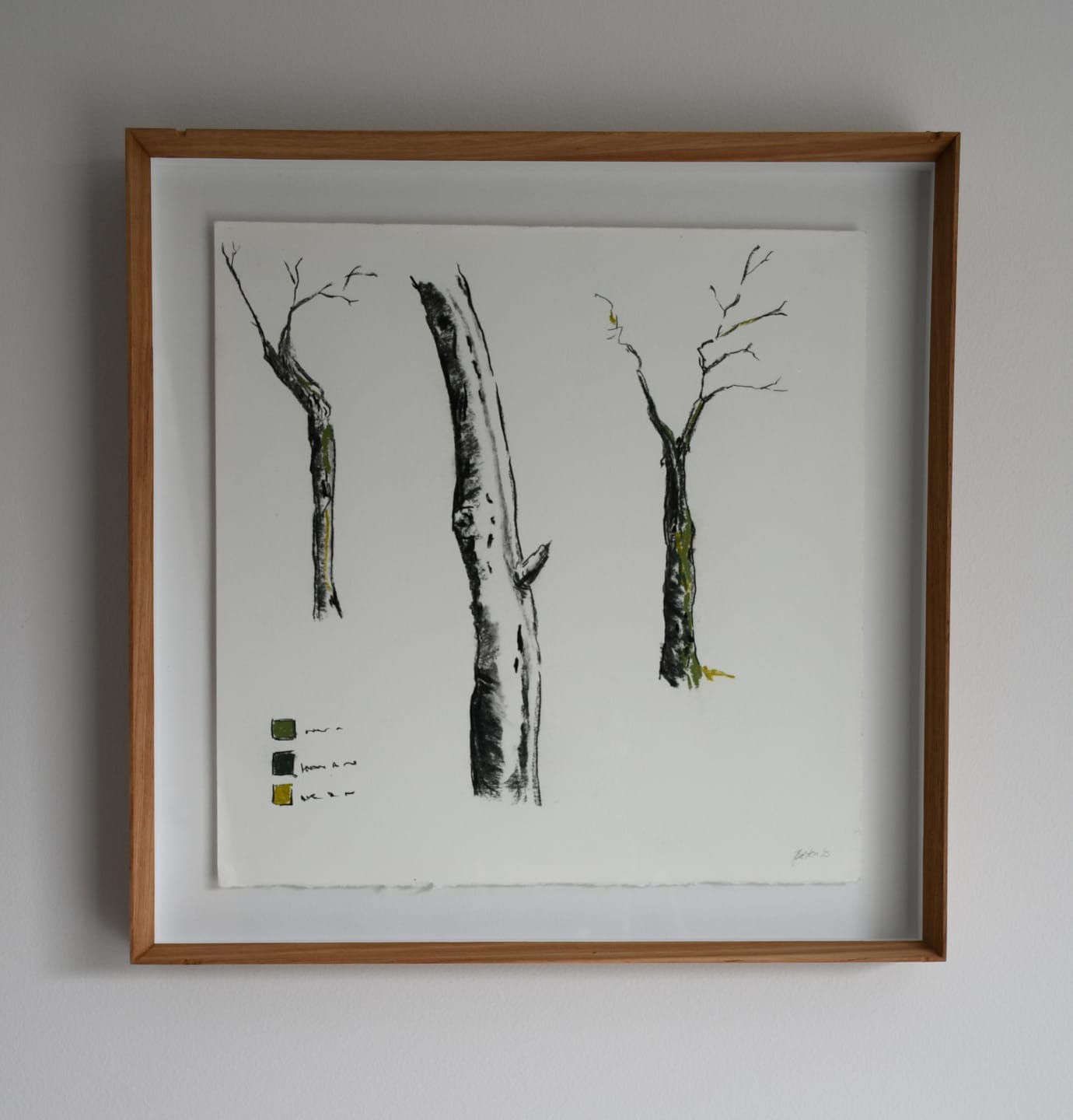
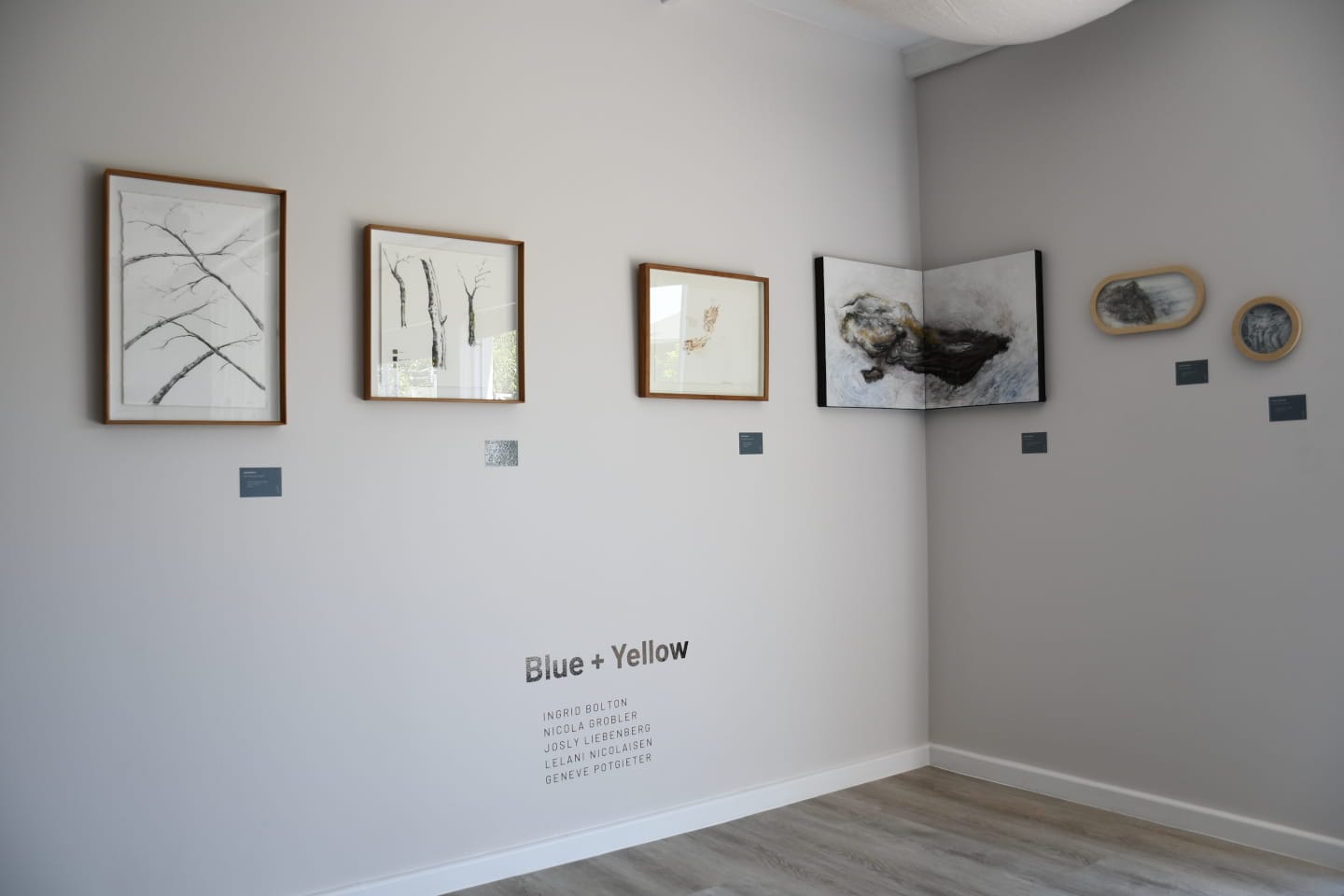
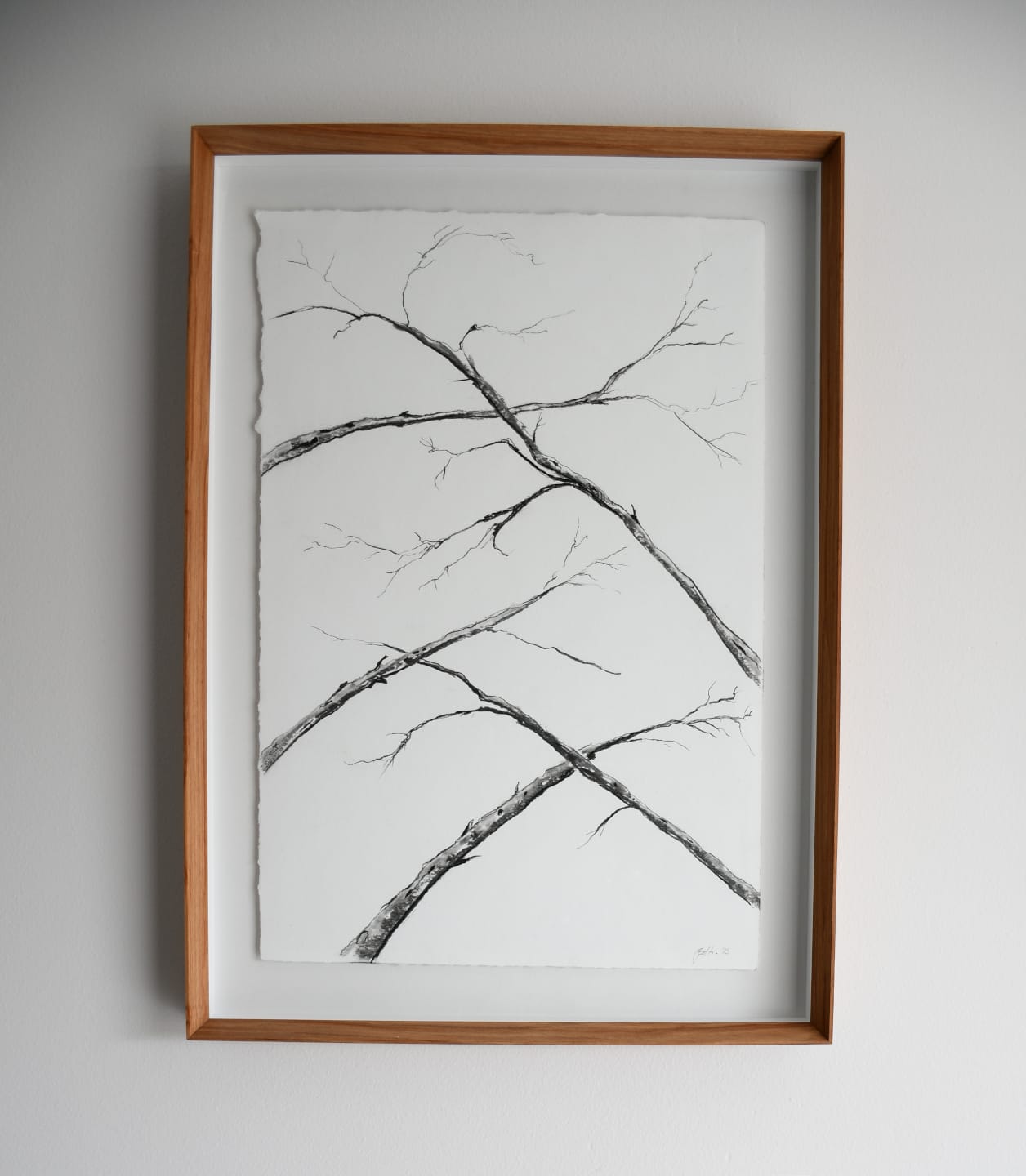
In my artistic practice, I explore the intricate connections between humanity, nature, and the remnants of mining through the lens of Kincentricity—the understanding that all elements of existence are interrelated and dependent on one another. These works are a dialogue between the majestic fever tree forest in the Pafuri area of the Kruger National Park and how they are formed. It is unique ecosystem shaped by both natural processes and climate change. Vachellia xanthophloea features a unique lime green bark that is coated in a golden yellow powder, from which its name is derived: the Greek word xanthos means yellow.
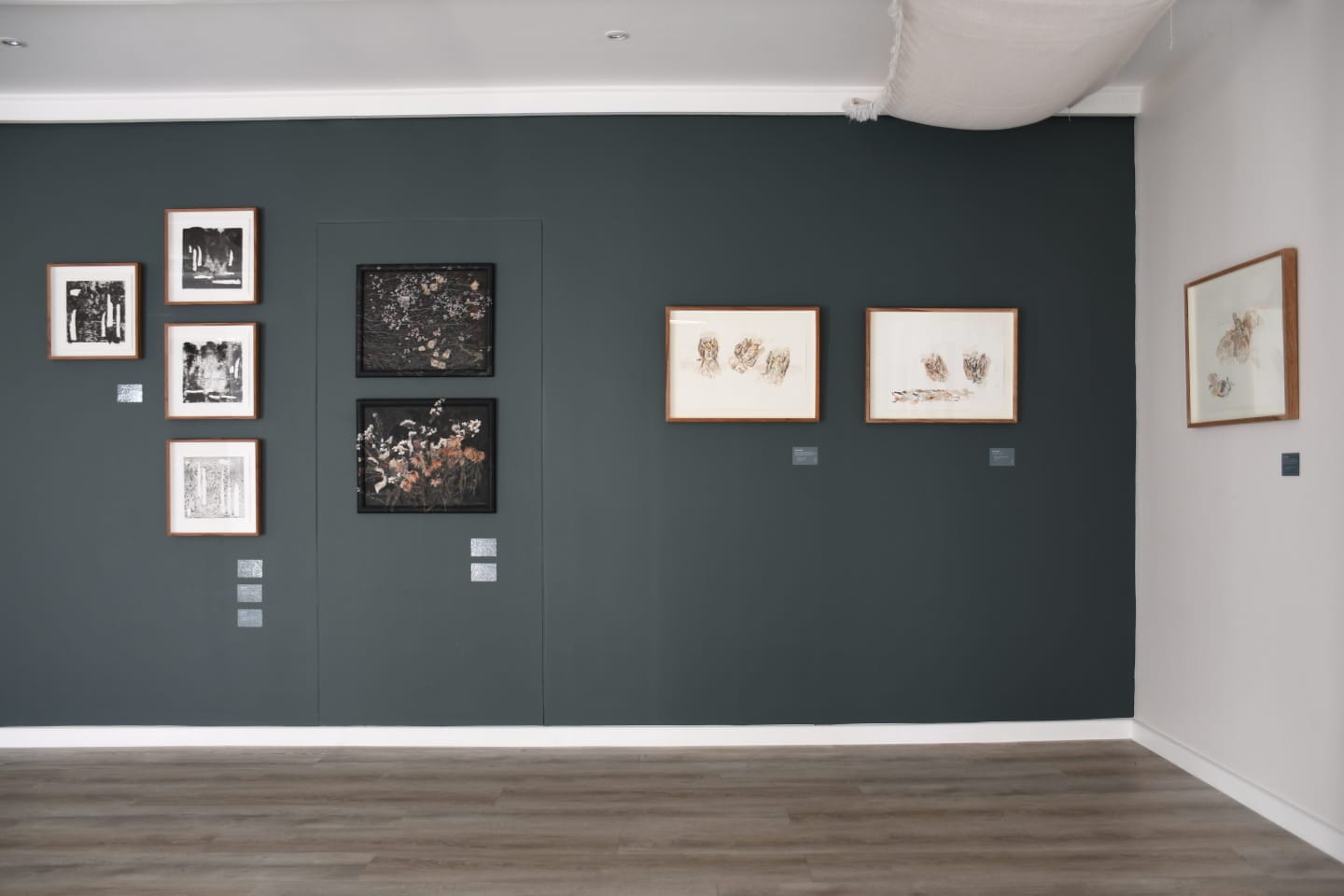
The process of extracting coal dust and transforming it into ink evokes a duality: the raw material signifies industrial power, while the gentle act of creation serves as a meditation on fragility. The process involves circular grinding of the coal powder on glass with a glass muller. The softer the sound of the grinding, the finer the ink: just a whisper is required for this ink. Marks made with charcoal pay homage to the formidable fever tree forest that stand resilient, formed through flooding and the chance alignment of timing, seed availability and water. These trees are ephemeral in nature, with a limited lifespan once the flood plain dissipates. Stoic yet vulnerable, they symbolise both the fragility of our ecosystems and the tenacity required to endure amid climate change. Utilizing coal dust and charcoal on paper, I create visual narratives that evoke the essence of the fever tree forest. The texture and depth achieved through these mediums symbolize the sediment layers of both the land and our histories. The use of coal dust specifically reflects the historical ties to mining, drawing parallels between extraction and the rich, yet vulnerable, resources we share with the natural world.
The smaller drawings of fever trees come together into a visual representation of the forest, illustrating how individual lives contribute to a larger ecosystem. The horizon line serves as a guiding constant in my work - a visual anchor that binds diverse elements of my practice together. It symbolizes the delicate balance between our world and the natural environment. This meeting point acts as a metaphor for our collective responsibility: even the smallest gestures have the power to shape the vast landscapes we inhabit.
I invite you to reflect on the tangled threads of connection that bind us and to recognize that it is within these very connections that hope and renewal can flourish. Each piece is not merely an object but a testament to resilience - a reminder that through understanding and collaboration, we can nurture the delicate balance between humanity and nature.
About Ingrid Bolton
Ingrid Bolton resides and works out of her studio in Cape Town. Bolton’s area of interest is taking pressing global issues and bringing them into the public space for discussion. With a background in microbiology, her interest fuels the need to make the microscopic world visible. A few years spent running a farm led her to focus her attention on the changes in climate conditions and the human-nature connection or kincentricity. Her predominant focus is climate change and works with materials like coal dust ink, calcium carbonate and porcelain. Her methods include monotype printing, embroidery and installation.
Recently she has exhibited work that looks at the role of microscopic organisms in the oceans, cable theft and ocean acidification – all global problems. She won the Sasol New Signatures competition in 2012 and her work is included in the Pretoria and the Kruizenga Art Museums, and in the University of South Africa, Sasol and Kilbourne collections. She has had solo shows at the Pretoria Art Museum, Sasol Art Museum and at Iziko South African Museum. She completed her Master’s degree at Michaelis School of Fine Art in 2016, after finishing the BVA degree through Unisa, where she was later a contract lecturer.
Nicola Grobler
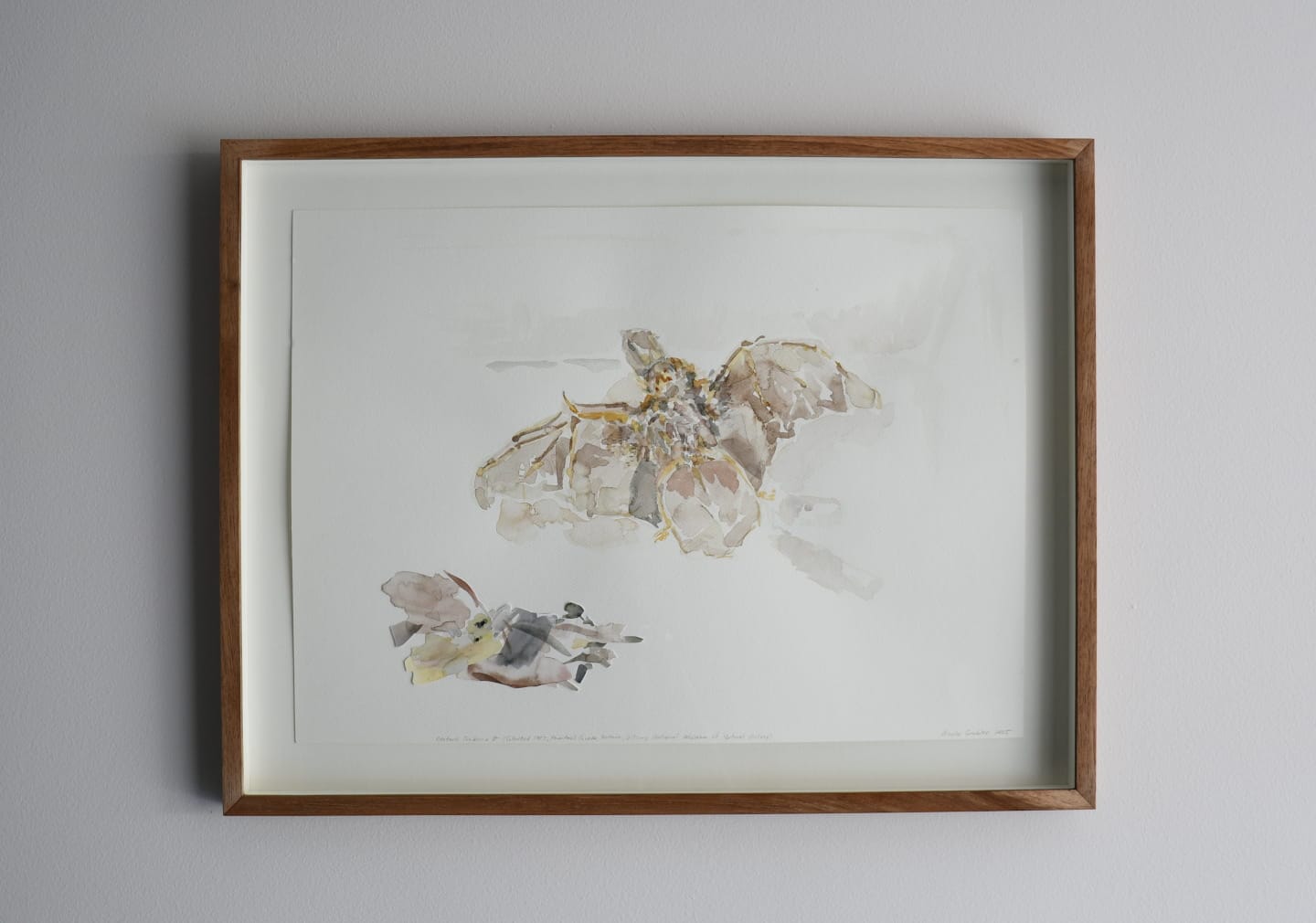
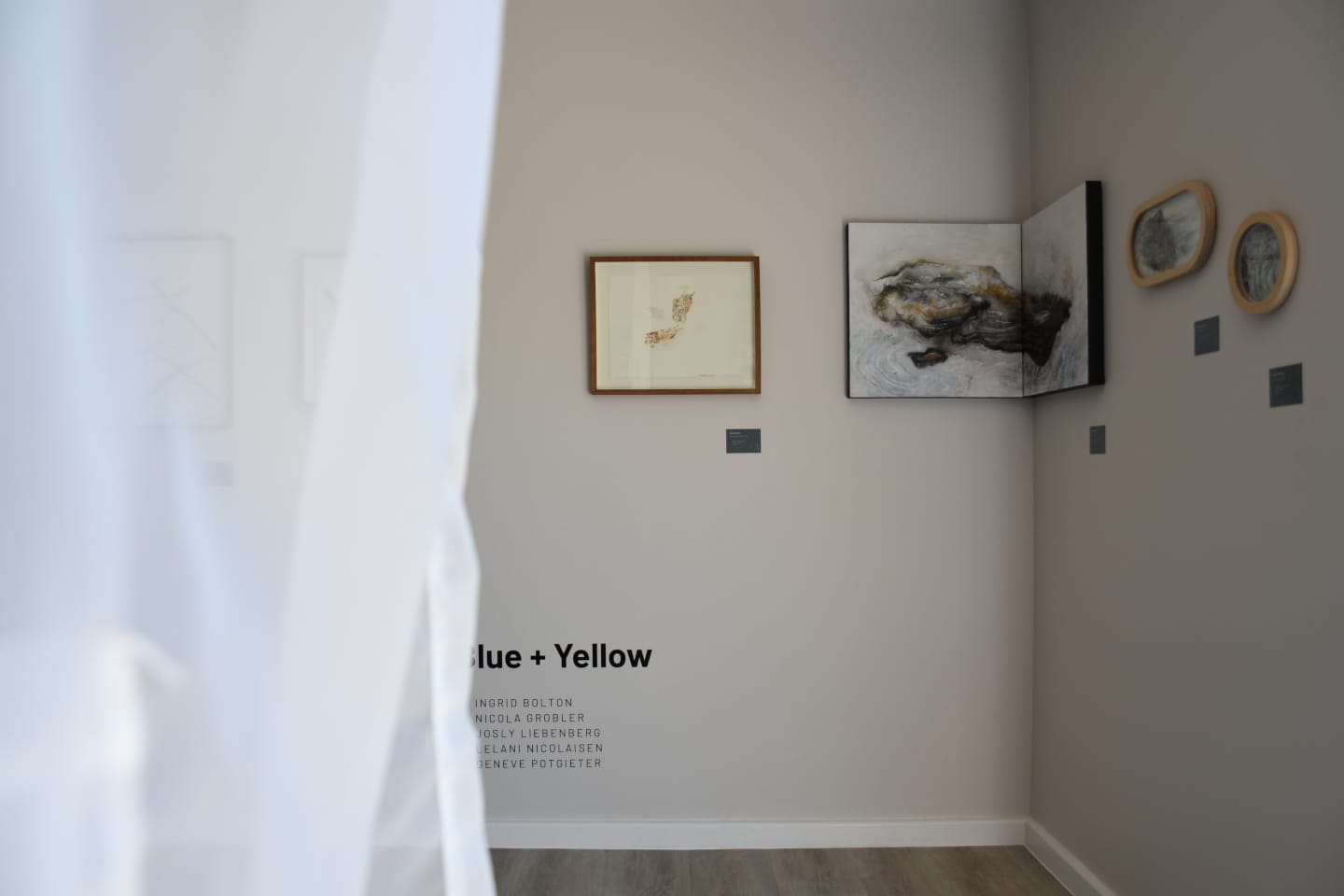
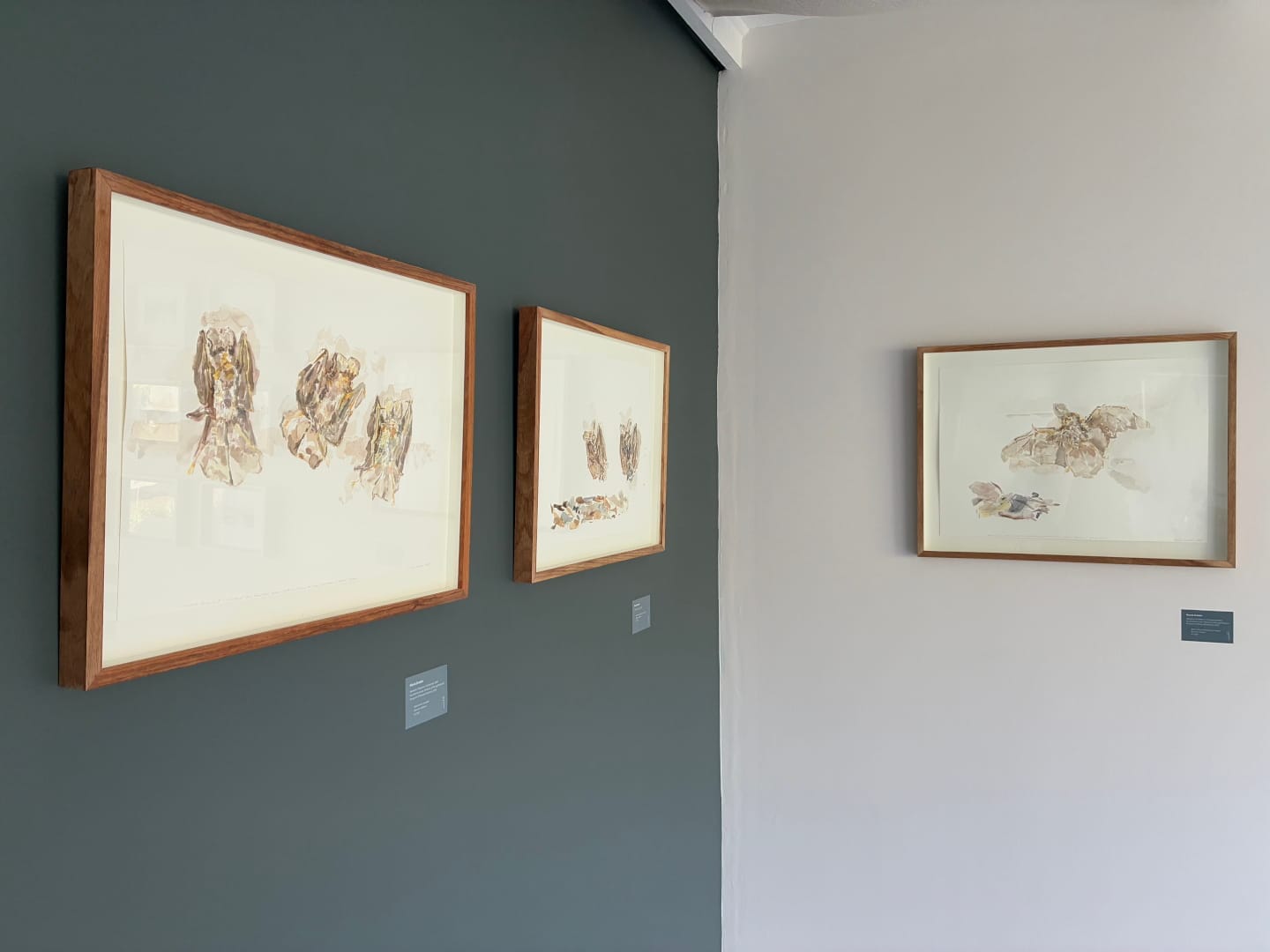
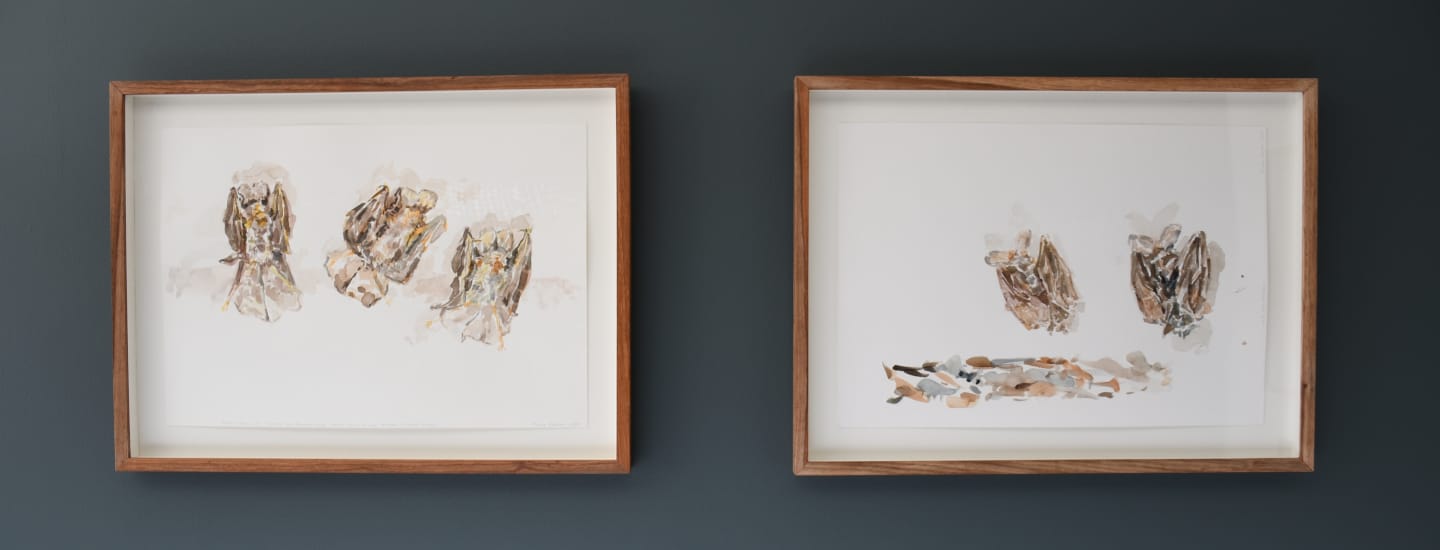
This selection of works on paper from my solo exhibition “Bat behaviour” (2025), traces relationships in the making. Created in situ at the Ditsong National Museum of Natural History (DNMNH), these studies are a way of animating the deceased specimens – to bring them to light and attention through loose brushstrokes and blended pigments.
I became interested in a group of slit-faced bats (Nycteris thebaica) from the museum’s dry collection. Catalogued in 1907 and collected at Fountain’s Grove, Pretoria, I speculated on their relationship to each other whilst drawing. In perceptual studies such as these, intersecting points and measurements are figured in relation to the specific animal and not through a universal measurement system. Noting each feature, where foot connects to wing, the perfect curvature of a calcar to assist with flight. Bunny ears, indented noses.
My relational method suggests that artistic processes such as observational drawings can pre-empt (and visualise) the formation of emotional bonds. By handling the wet specimens, I learned through touch. The artworks in bat behaviour, as markers of “getting closer” to bats, are invitations to look beyond popularised conceptions of bats, to engage with difference and specificity, and to follow these gestures of care.
These works were created with financial support from the University of Pretoria and during my artist residency at Future Africa, UP. With thanks to Dr Teresa Kearney, curator of the small mammal collection, DNMNH.
About Nicola Grobler
Dr Nicola Grobler is an artist and senior lecturer in Fine Art at the School of the Arts, University of Pretoria and is currently Artist-in-Residence at Future Africa, UP. Her artistic practice is focused on artistic strategies involving public participation to bring urban multispecies entanglements to attention, such as in the artwork The Visitor Centre (2016-2018). Grobler’s practice reflects critically on artistic methods and approaches such as assemblage, relational aesthetics and anthropomorphism, while engaging with related fields such as urban ecology, empathy studies, care ethics and museum studies. Working across mediums in installation, sculpture, drawing, collage, artist’s books and video, her work seeks to establish connections between subjective experiences, artistic processes, scientific research and local contexts.
Her solo exhibition, Bat behaviour, was shown at the Free State Arts Festival (2025) and she participated in the group exhibition Plurality (2024), Javett-UP Bridge Gallery. Grobler’s article “Encouraging multispecies sociability through art: anthropomorphism in The Visitor Centre” is forthcoming in a special issue of de arte focused on artistic approaches to the environmental crisis. She is one of the research leads in the collaborative project, Co-MammalHub, that is focused on revitalising the public displays at the Ditsong National Museum of Natural History through embodied learning and co-creation.
https://orcid.org/0000-0001-6649-9711
Josly Liebenberg
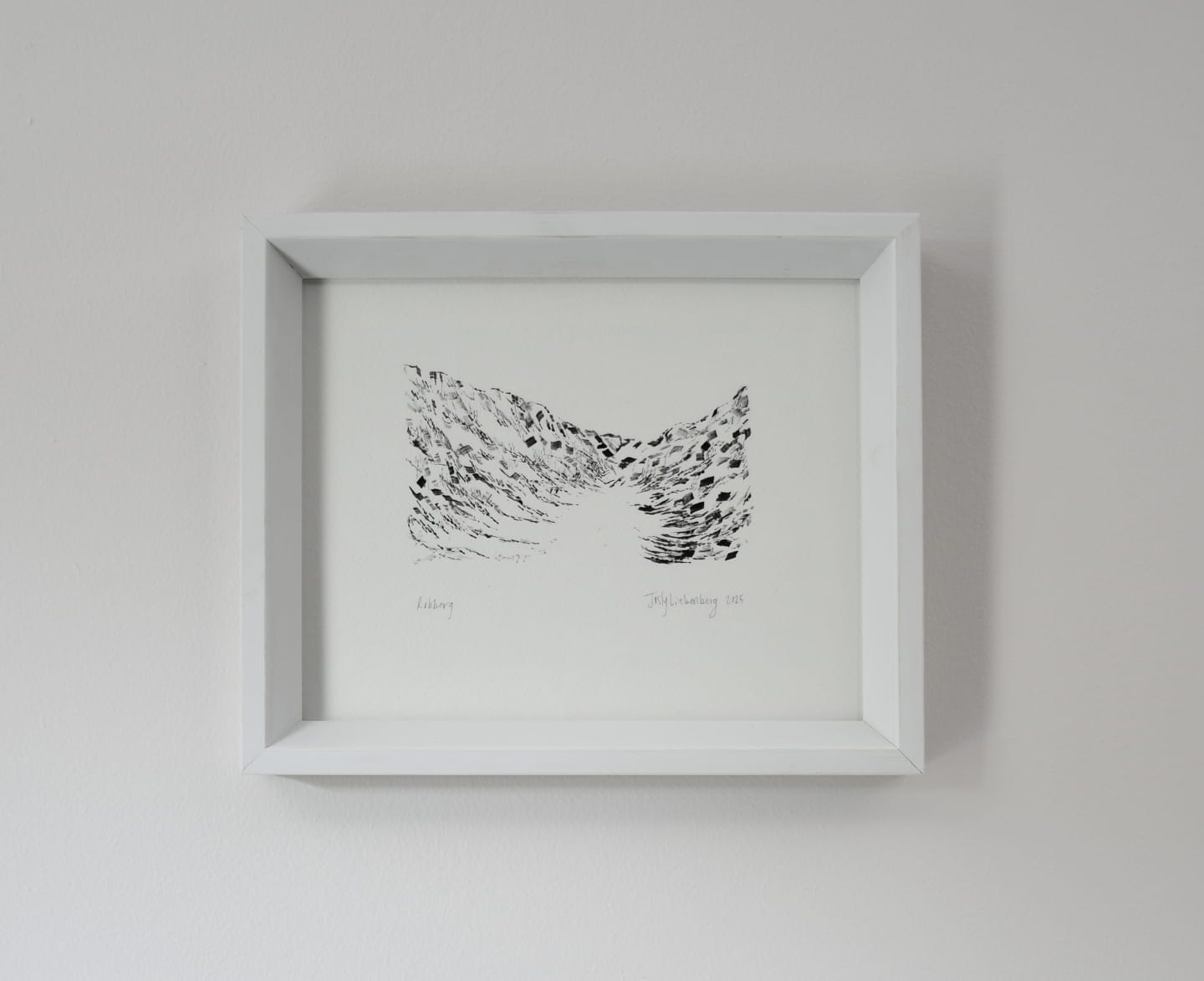
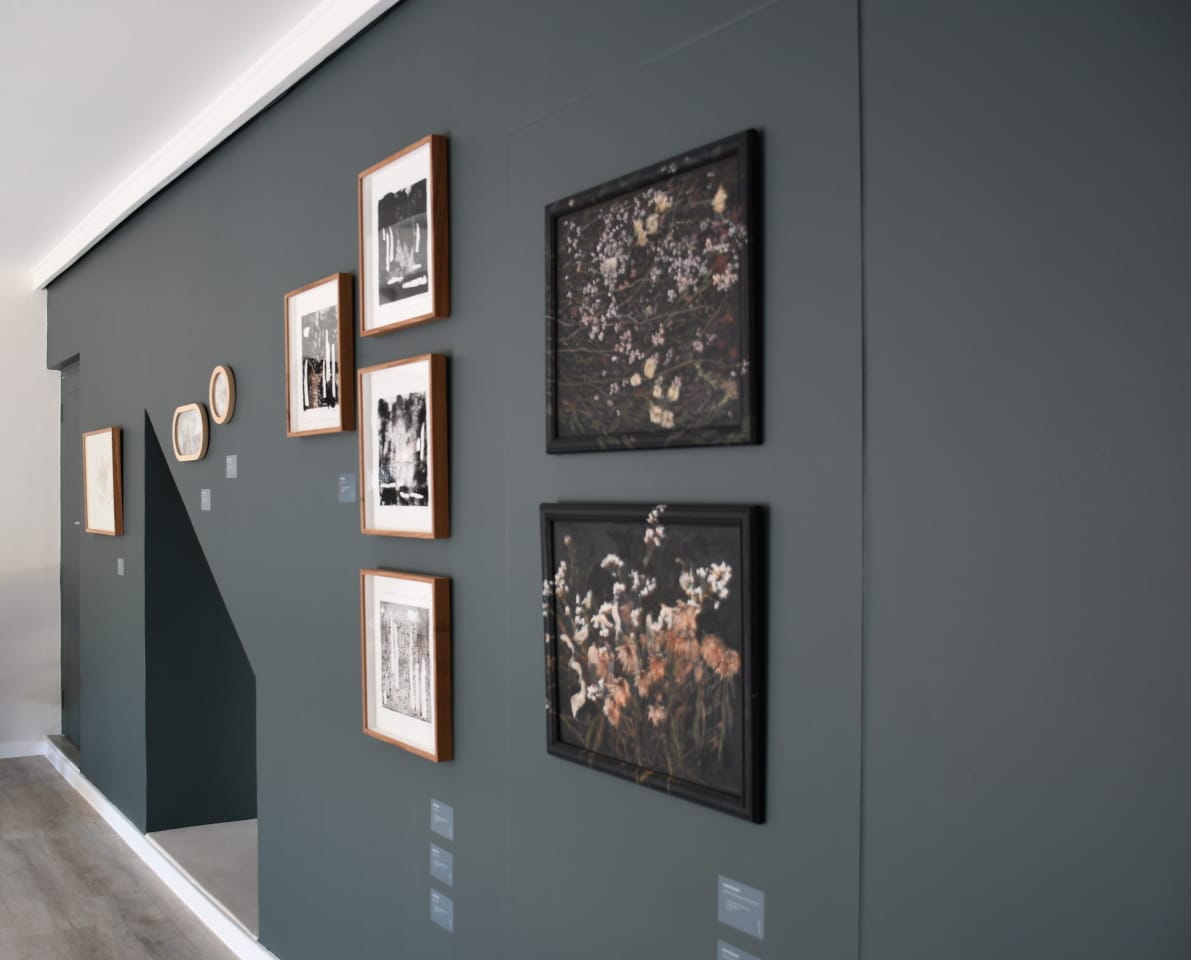
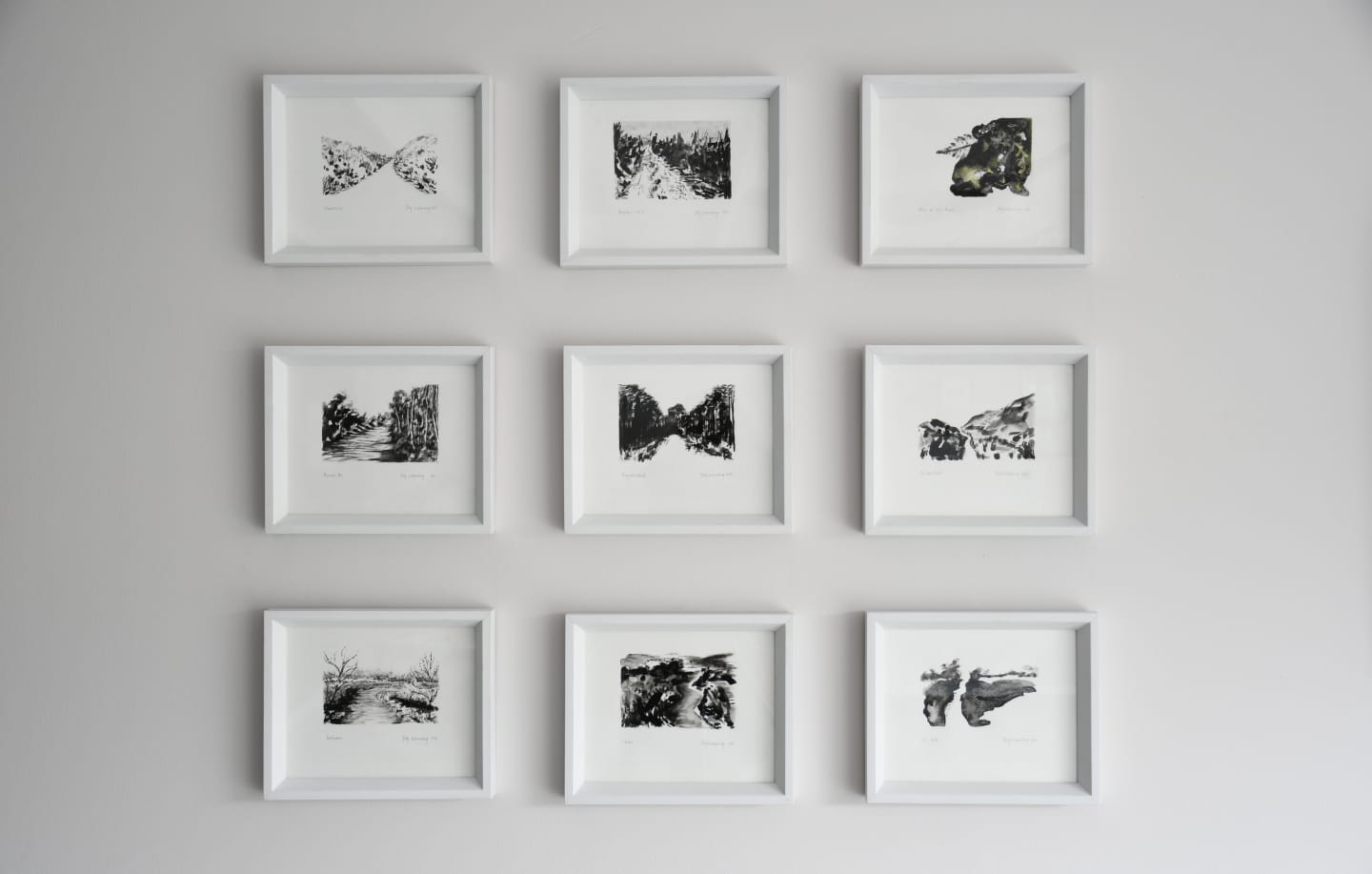
I am currently exploring environmental concern by looking at biodiversity loss caused by deforestation and pollution. By observing and documenting botanical form and its ecological surroundings, I frame my work in the light of chosen perception, how humans choose to perceive and engage with the natural environment. During brief interactions with nature we tend to read an environment as a whole, overlooking botanical details and the intricacies of how mutually dependant species are within an eco-system. To signify this oversight, I use large brush strokes to paint black and white imagery, portraying the form of the landscape but omitting most of the details such as the plants, animals and insects. This over-simplification of the environment is painted in a postcard format, connoting the notion of nostalgia. The roads I depict are footpaths and gravel roads that formed by perpetual human activity. The pathways signify the choices of either protecting our natural environment through conservation and sustainable practices or the threatening alternative of pollution and deforestation. It is my contention that it is our responsibility to choose the lens through which we perceive the environment and how we view our own actions pertaining to nature.
About Josly Liebenberg
South African artist, Josly Liebenberg, explores environmental concern through the observation and documentation of botanical form and its ecological surroundings. Liebenberg’s ink studies touch on themes of biodiversity loss, absence and chosen perception. Her current body of work reflects unedited mark making, as though paging through a sketchbook. Liebenberg holds a master’s and bachelor’s degree in fine art from the University of Pretoria. During her masters studies, Liebenberg explored the aesthetic potential of household waste and have since expanded the scope of her research to the impact humans have on the natural environment. After completing her studies, Liebenberg worked in the furniture design space and slowly transitioned back into the art world. Liebenberg is currently running her art business from her home studio and collectively curating exhibitions for art festivals and galleries throughout South Africa through the platform of Micro.Exhibits.
Lelani Nicolaisen
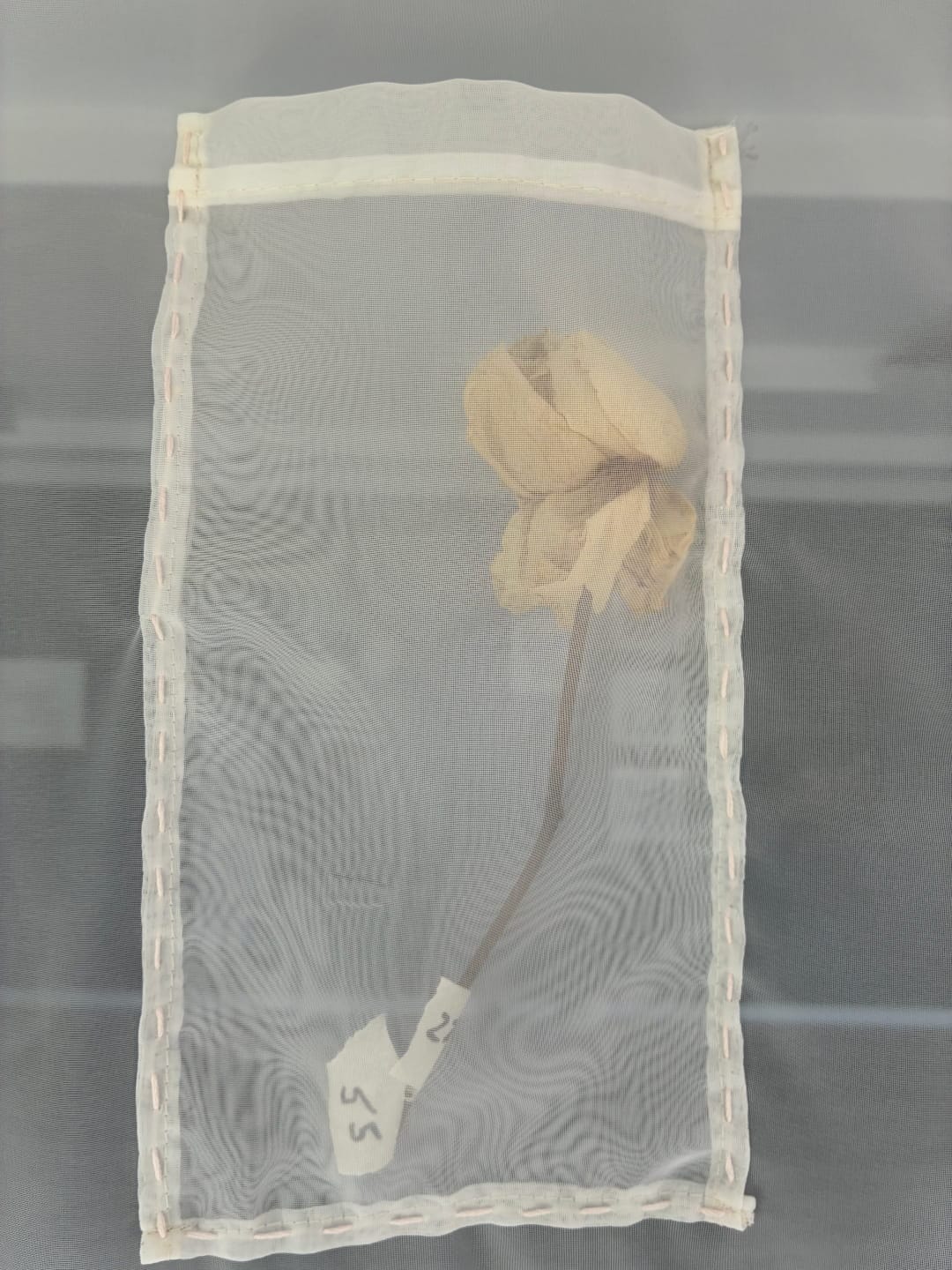
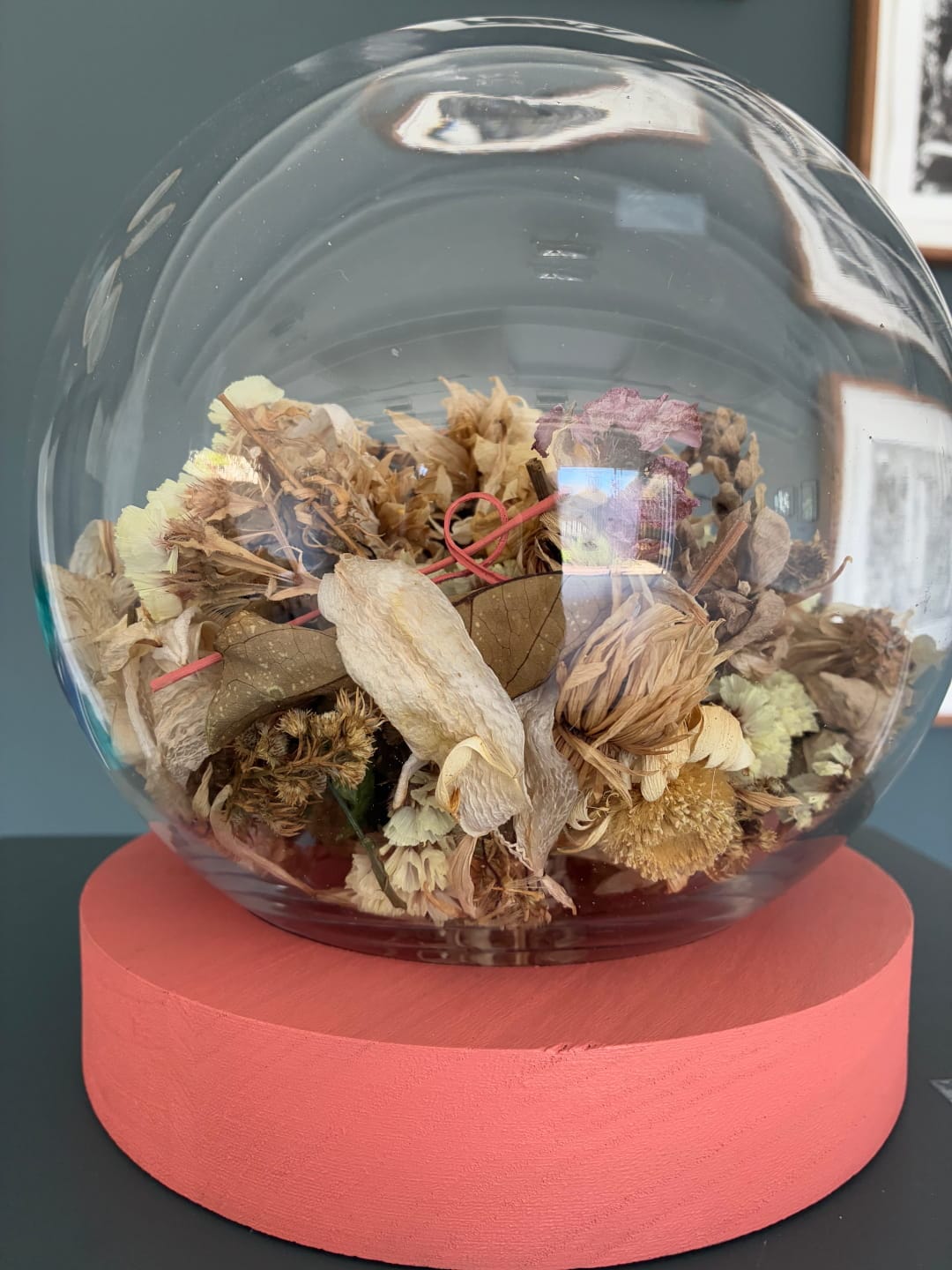
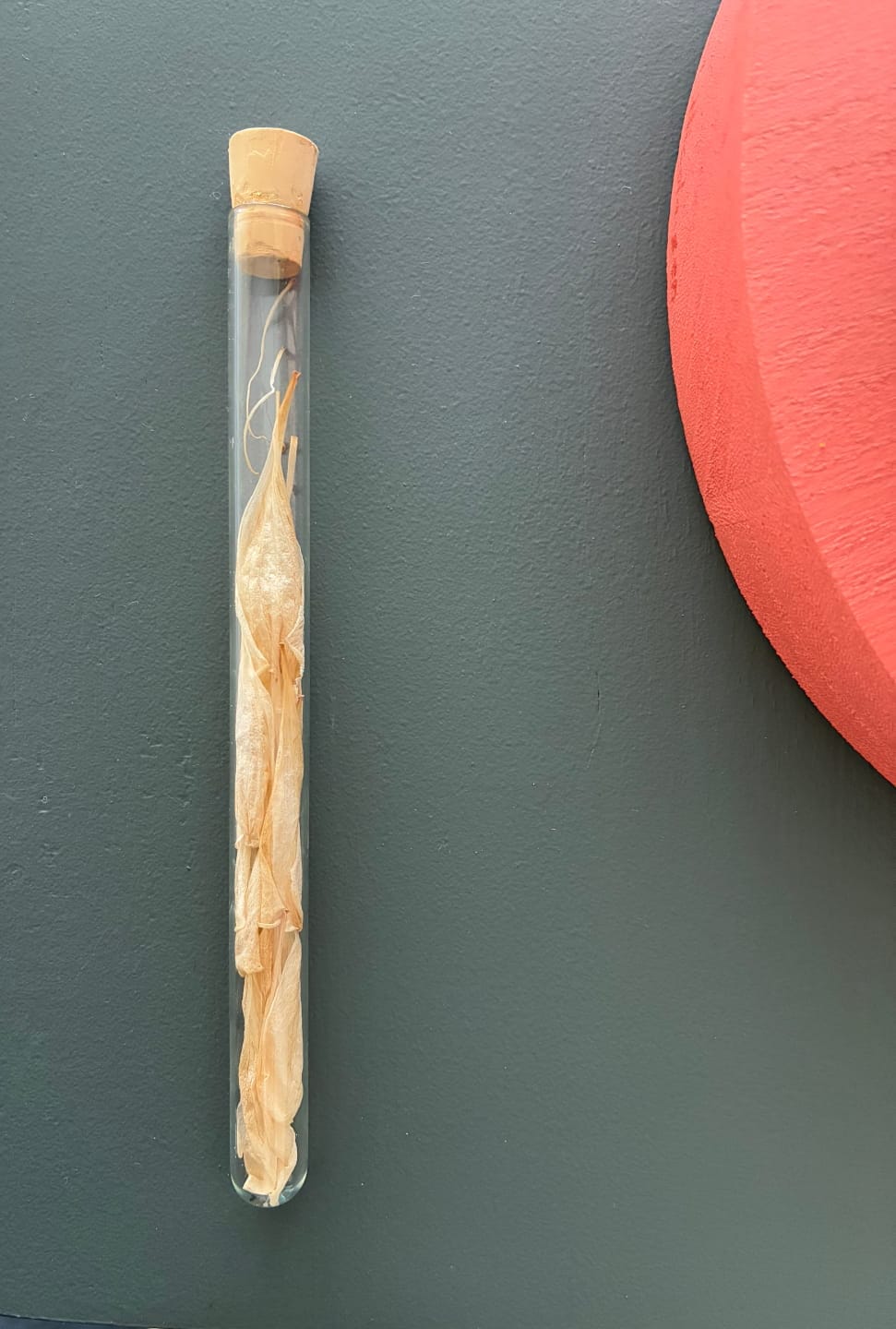
Through installations and paintings, Lelani Nicolaisen transforms the remnants of once-lively blooming gifts of affection, tokens of beauty, offerings in death into vessels of mourning and reverence. These flowers, once taken from nature to signify care, now serve as relics of impermanence, preserved in transparent vessels and embedded into the domestic remnants of the past. As Nicolaisen mourns for these wilted and dried out flowers, she also personalises flowers as a metaphor for how the natural environment itself can experience grief, suggesting that nature's mourning is not always visible.
A curtain installation holds dead flowers in clear compartments, suspended like moments frozen in time, while a series of paintings occupies the frames that once housed family photographs. These frames become reliquaries, hosting layered memories and the painted remains of flowers, tethering personal mourning to the broader grief of environmental decline.
Nicolaisen confronts the embodied nature of grief, treating the physical act of making through painting, sewing, and arranging, as a mode of healing and reflection. She invites viewers into an intimate and tactile contemplation of the ways we carry loss, in both body and space, and the delicate boundary between mourning and remembering, between ecological and personal grief.
0:00
/0:10
About Lelani Nicolaisen
Lelani Nicolaisen is a South African artist and curator working and living in Plettenberg Bay. Her practice spans painting, sculpture, and installation, through which she navigates the complex intersections of personal and ecological grief. Her work is characterised by stillness, introspection, and a heightened sensitivity to time, place, memory and emotional residue. Nicolaisen invites quiet reflection while probing the evolving relationship between artist, artwork, and audience. She is particularly interested in how art affects the audience in the act of looking.
Nicolaisen holds both a Bachelor of Fine Arts and a Master of Fine Arts from the University of Pretoria. She has participated in the International Curatorial Program and the Inclusive Curatorial Practices Program through the Node Centre for Curatorial Studies. Her works are represented in the public collections of the University of Pretoria and the Art Bank of South Africa. She has exhibited in exhibitions locally and internationally.
Geneve Potgieter
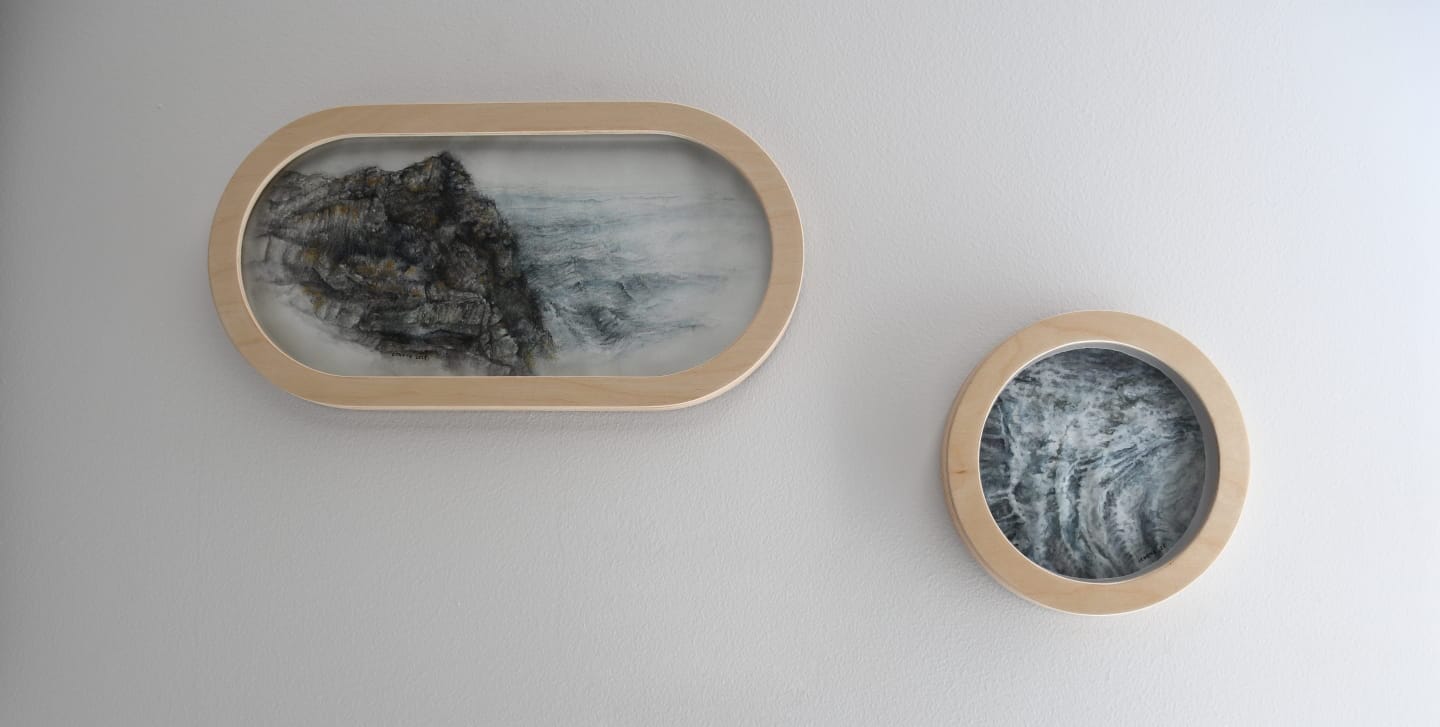
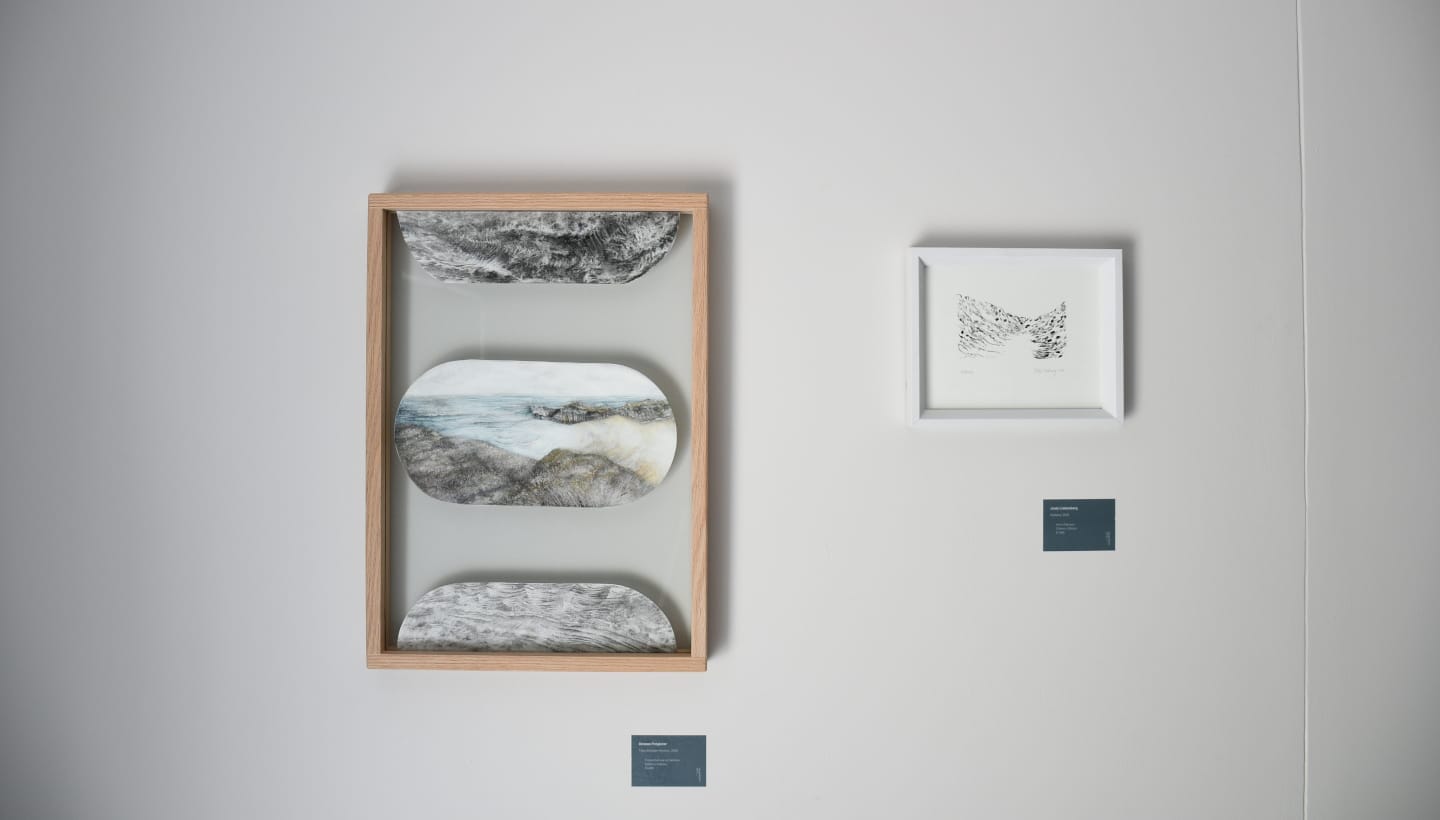
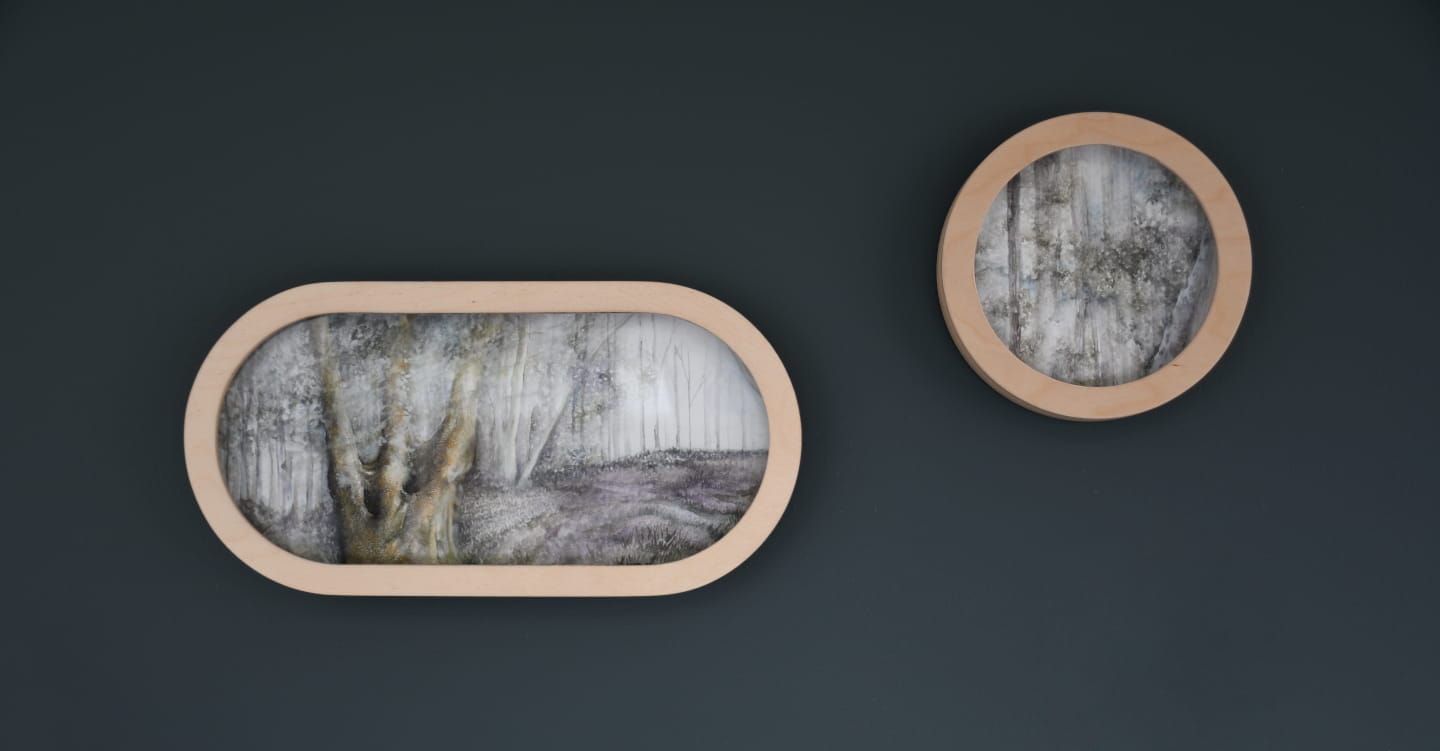
Inspired by the narrative of the land, inscribed in its contours, Potgieter revisited her collection of memories from her travels to Plettenberg Bay and specifically the Robberg Nature Reserve. Potgieter envisions contours as subtly keeping record of natural events unknown to its current residents. In this view the landscape can be interpreted as a visual diary of obscured experience to be relived through each wanderer's view. Each experience encapsulates a personification, a remnant of a fleeting encounter, becoming a small but notable contribution to nature’s living memory. In this collection, titled The Land Remembers, each artwork reflects a personal recollection of a moment within the broader timeline of the landscape. It is as though nature calls upon the individual to bear witness, to capture and contribute to its unfolding story through an intimate emotional connection. In doing so, each piece becomes a smaller entry in a vast communal diary, that is narrated through the voice of nature itself. The medium of tinted charcoal contributes to this narrative as it is handled in a painterly manner, evoking soft, muted tonalities that capture the transience of nature, private reflection and lived moments.
About Geneve Potgieter
South African artist Geneve Potgieter’s work embodies her appreciation for the natural environment. Being influenced by discourses of environmental awareness, her work renders an ambiguous reflection towards a transient world. The abstraction of Potgieter’s subject matter creates a dissociation, which leaves a resolution just out of reach. Her work challenges a sense of familiarity, reflecting on intuitive preservation. Through her chosen mediums of charcoal, graphite and ink a close scrutiny of the more intimate parts of nature are considered, which are constantly in flux between an apprehensiveness of ecological loss and naïve admiration.
Geneve Potgieter received her Bachelor’s degree in Fine Art from the University of Pretoria. Potgieter [née Eloff] is published in the 3rd Edition of The Collector’s Guide to Art and Artists in South Africa and her work forms part of a selection of corporate and private collections. Most recently her work was included in an auction at Strauss and Co and is currently being exhibited at the Jan Rupert Art Centre, Rupert Museum in Graaff-Reinet.
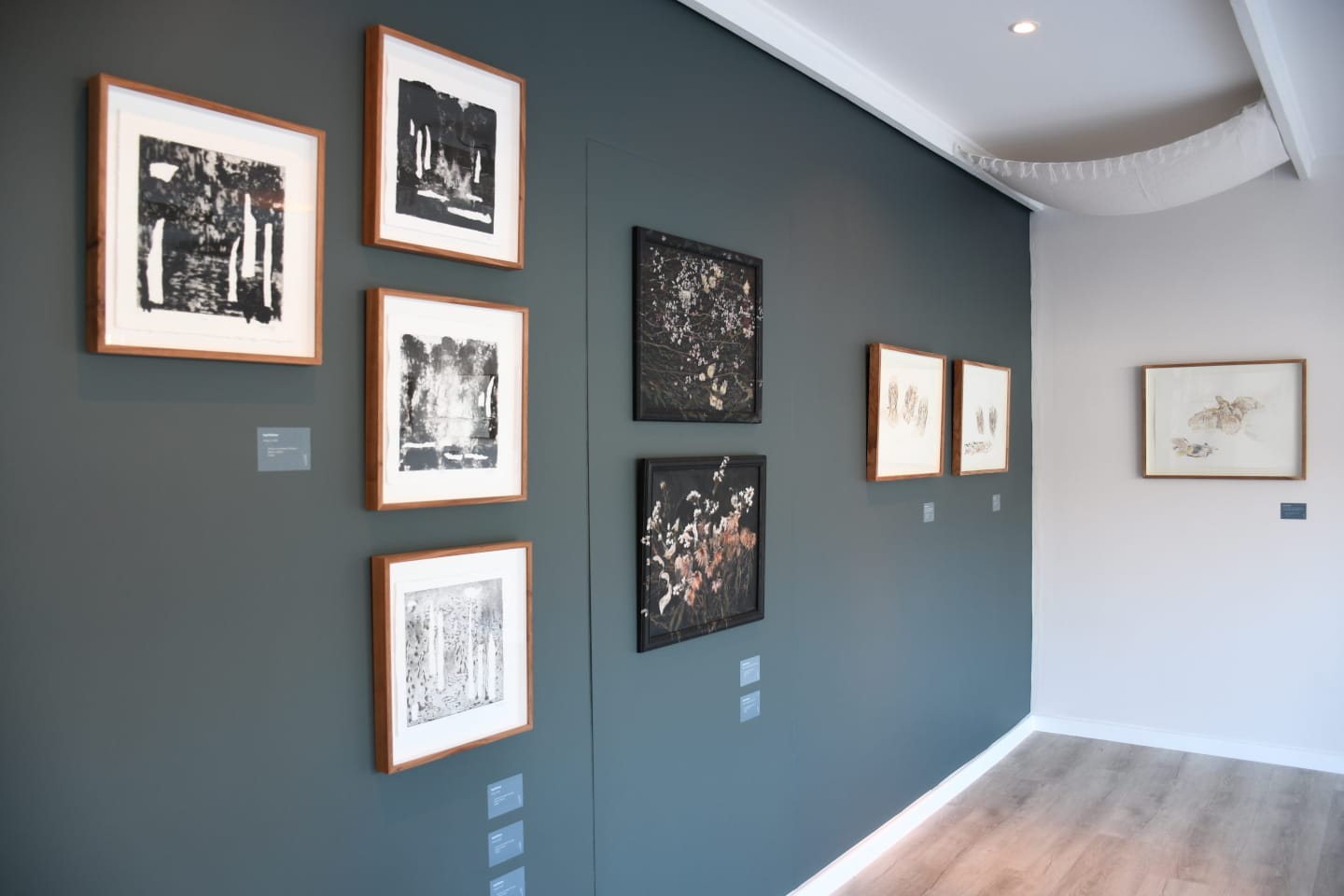
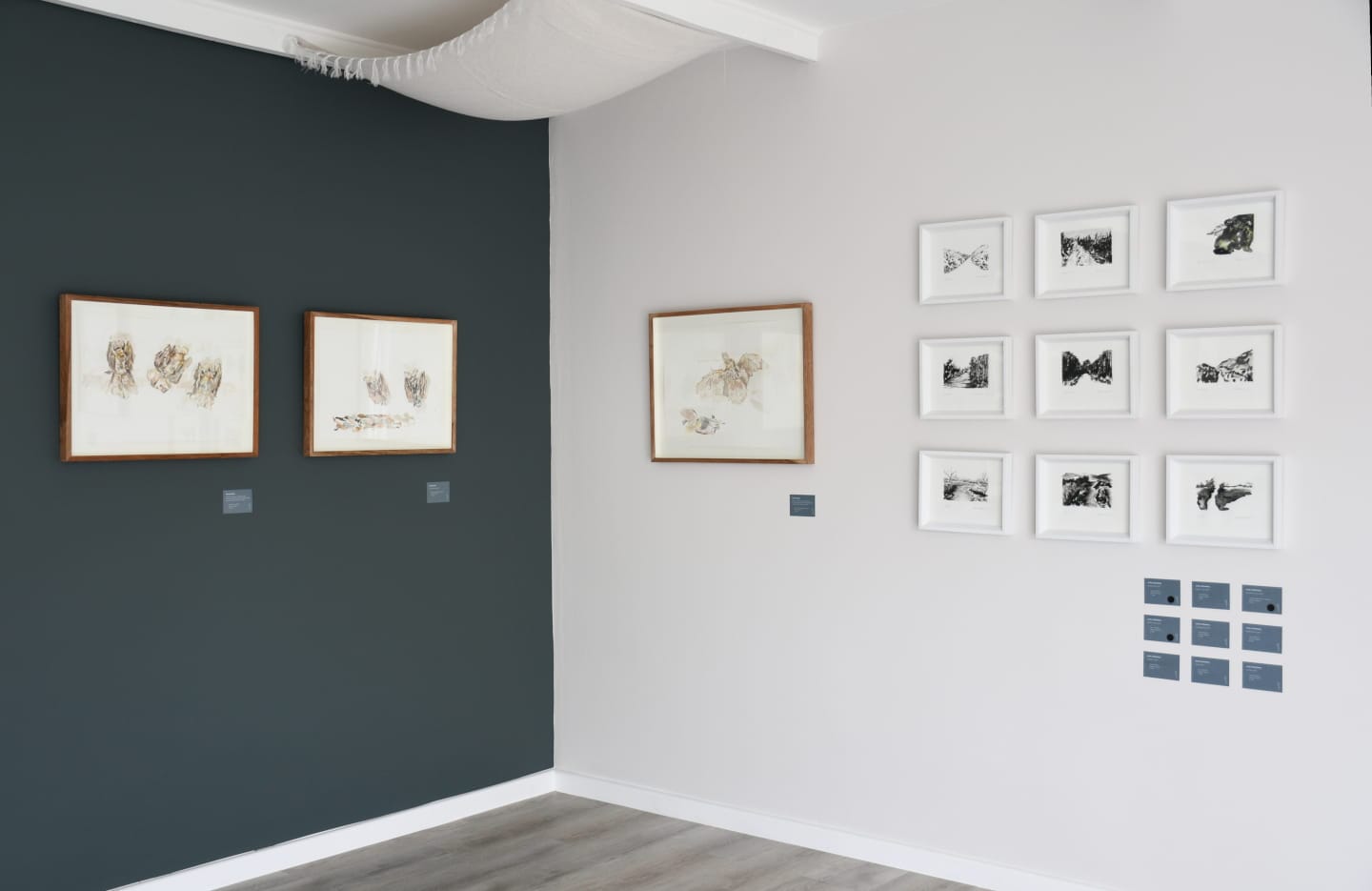
Installation Photos